Highlights
- Uncover the untold stories of Cape Town's Black heritage on a guided tour
- Visit the Castle of Good Hope and learn about the first indigenous conflict
- Explore District Six and hear about the pain of forced removals
- See the Slave Auction Tree and Slave Lodge and learn about Cape’s slave history
- Visit St George’s Cathedral and learn about its role in the fight against apartheid
Description
Begin your tour at the Castle of Good Hope, South Africa’s oldest surviving colonial building. Learn about the beginning of European settlement in the Cape and the start of dispossession for the indigenous Khoi and San peoples. Hear how colonial authorities waged the first wars against the Khoi, forever changing the land and its people.
Next, visit District Six, once a lively, multicultural neighborhood. Learn about its history as a place of music, culture, and close-knit communities. Hear how, in 1966, the apartheid government declared it a “whites-only” area, forcing more than 60,000 residents from their homes. See how the land stood empty for decades, a silent testament to the pain of forced removals.
Continue to the Slave Auction Tree, a public site where enslaved men, women, and children were sold like property. Learn how many had been brought from across Africa and Asia, their labor building much of the city. Just a short walk away, see the Slave Lodge, which housed hundreds of enslaved people under harsh and inhumane conditions, serving the needs of the Dutch East India Company.
Next, visit St George’s Cathedral, known as the “People’s Cathedral.” Learn how it became a center for resistance during apartheid. Hear how, led by Archbishop Desmond Tutu, it provided a safe space for activists, hosted prayer vigils, and launched protest marches that challenged the regime. See how it remains a symbol of faith, courage, and moral leadership.
Continue to the Parliament Building, where laws that shaped the nation were debated and passed — from colonial policies and apartheid legislation to democratic reforms after 1994. Learn about the two stories it tells: one of oppression enforced through law, and another of the people’s will triumphing to create a new South Africa.
Next, visit the Company’s Garden, established by the Dutch to grow fresh produce for passing ships. Learn how the garden was tended by enslaved laborers. See how today, it’s a peaceful public space filled with statues, flowers, and trees — but also layered with the history of colonialism and the exploitation that sustained it.
Continue to the Apartheid Benches, replicas of those once marked “Whites Only” and “Non-Whites Only” during apartheid. Learn how they serve as a stark reminder that segregation wasn’t just a policy — it was woven into the smallest details of everyday life.
Next, visit Greenmarket Square, one of Cape Town’s oldest public squares. Learn how it was once a site where enslaved people were sold, later becoming a rallying point for anti-apartheid protests. See how today, it’s home to a bustling market where traders from across Africa sell their crafts.
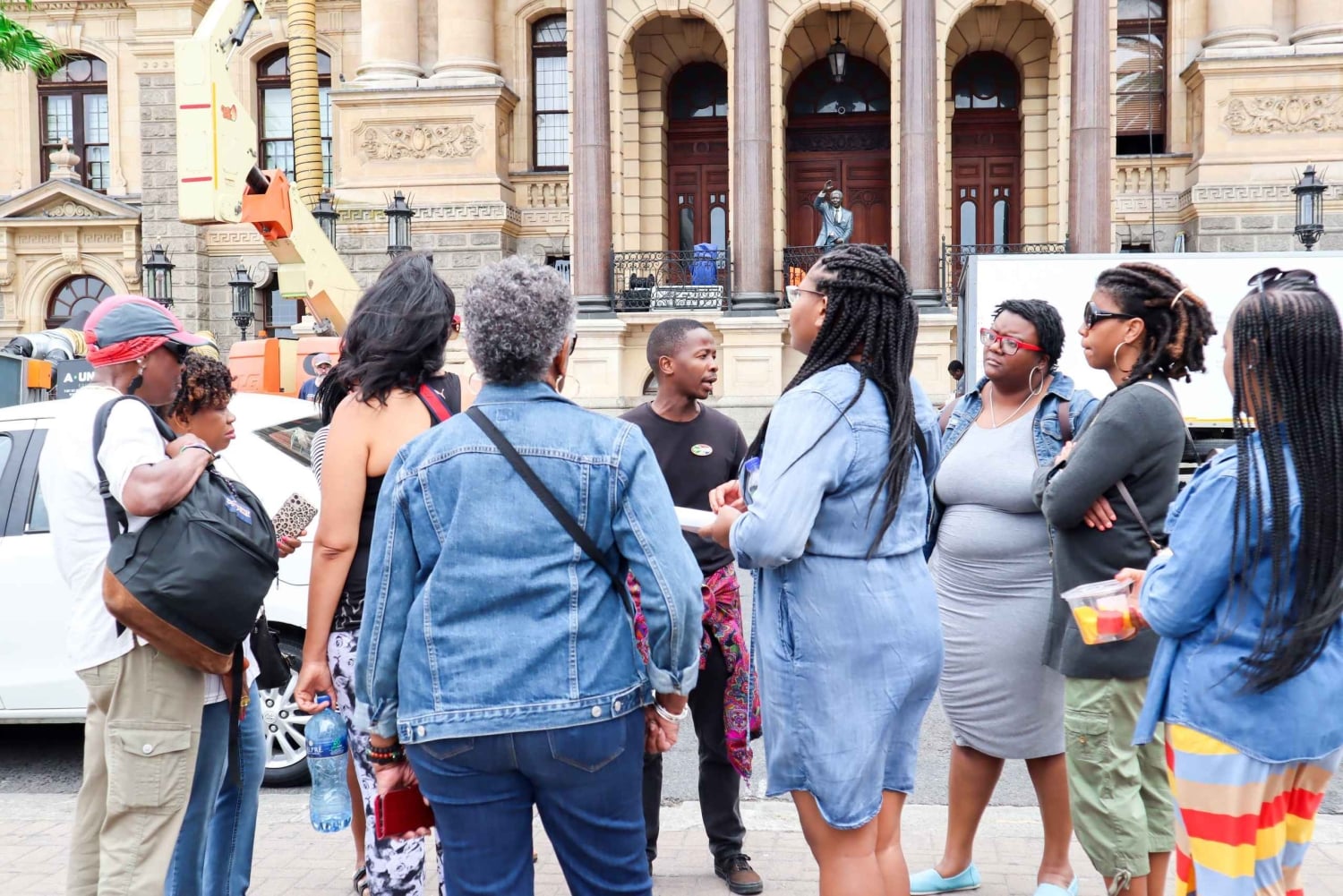
Finally, visit City Hall, where on February 11, 1990, Nelson Mandela stood on the balcony just hours after his release from prison, addressing thousands of South Africans. Hear how his speech marked the dawn of a new era and remains one of the most significant moments in the country’s journey to democracy.
Includes
Guided walking tour
Local guide
Excludes
Food and drinks
Transportation to the starting point
Important Information
- The tour involves walking, so wear comfortable shoes.
Bring water and sunscreen to stay hydrated and protected from the sun.
The tour is not suitable for people with mobility impairments or wheelchair users.
Easy cancellation
Cancel up to 24 hours in advance for a full refund